

Home Inspections · Kentucky & Indiana
A clearer view of the home you’re considering.
Whether you are buying, selling, or planning ahead as an owner, 502 Inspections brings structure to a visual assessment of the home’s accessible systems and components.
The decision ahead
For the Decision in Front of You
A home decision can arrive with a tight timeline, a long wish list, or a question you have been putting off. A buyer may be deciding what to investigate before closing. A seller may want a more grounded understanding of the home before listing or responding to questions. An owner may simply want a practical baseline for maintenance and future work.
The inspection is designed to replace assumptions with observations. It creates a useful record of conditions seen during the visit, so you can distinguish the items that deserve timely attention from the ones to track and plan for. That perspective supports a more deliberate conversation with the people advising you—not a rushed reaction to a long list of notes.
Systems & components
A Practical Look at Accessible Systems
502 Inspections reviews a broad range of visible, accessible components and systems. The evaluation may include the roof and exterior, driveway and walkways, decks, porches, patios, garage, living spaces, bathrooms, kitchen, laundry areas, and readily observable foundation, framing, attic, basement, or crawlspace conditions.
Mechanical observations extend to items such as the electric panel and branch wiring, plumbing waste and water-supply lines, water heater, heating, cooling, fixtures, outlets, and controls that are normally operated by an owner. The exact observations necessarily follow the property itself: accessibility, operating conditions, and the systems present all shape what can be assessed on inspection day.
Putting findings in context
Findings That Help You Prioritize
A home inspection is not a pass-or-fail verdict. Homes of every age have strengths, maintenance needs, and conditions worth a closer look. The value is in understanding what the observed conditions mean for normal use, safety, and planning.
The most productive review begins with safety-related concerns and material deficiencies—components that are not performing their intended function or may affect normal use of the home. From there, it is easier to organize questions for appropriate licensed tradespeople, decide which matters to address first, and keep smaller maintenance items in proportion. Findings are context for your decision; they are not a prediction of every future repair.
An actual report
A Report Built for Understanding
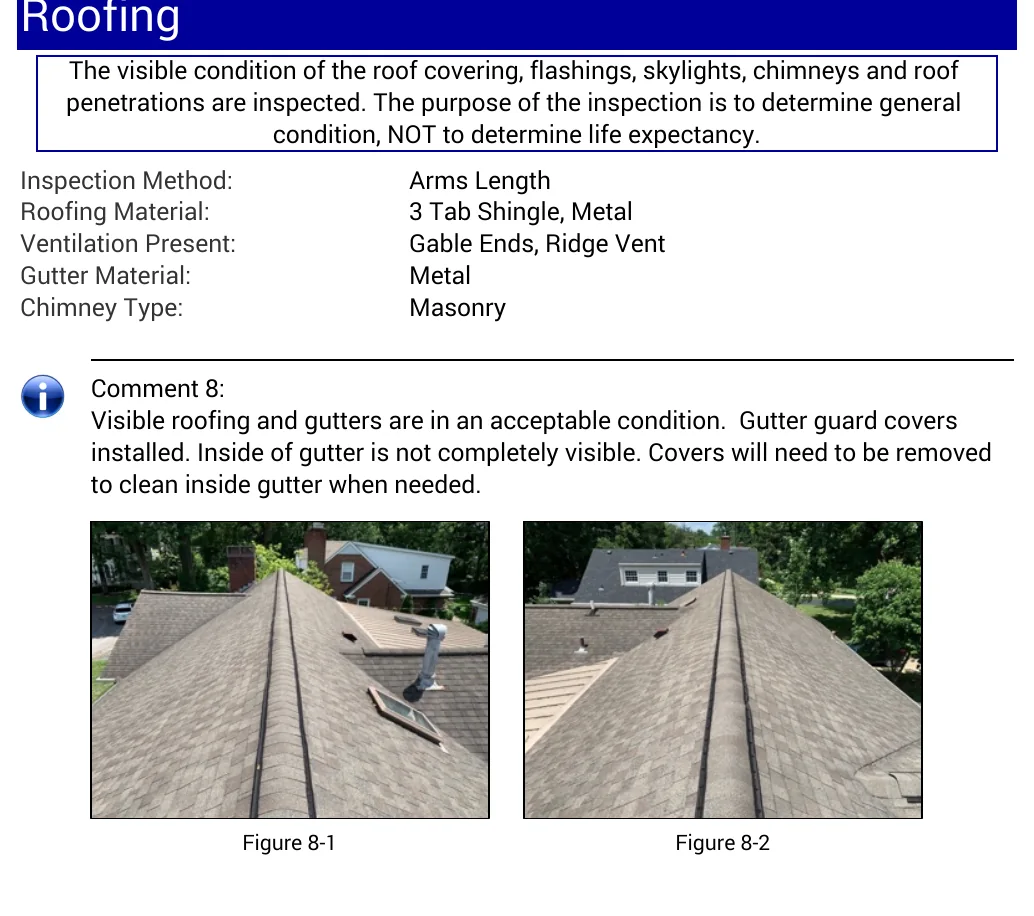
A report should be useful after the walkthrough is over. Our inspection reports are detailed, comprehensive, easy to read and include photos and summaries. Those elements help turn observations into an organized reference rather than a collection of disconnected comments.
Use the report to revisit systems room by room, share the relevant observations with contractors, and prepare focused questions for your real-estate or maintenance conversations. Photos can make it easier to identify the location or condition being discussed, while summaries provide a practical place to begin. Keep the report with your property records; it can inform future maintenance planning as well as a current transaction.
Understanding scope
The Boundaries Matter
A residential inspection is a visual analysis, not an exhaustive investigation of every condition that may exist behind finishes, below ground, or outside reasonable access. Kentucky law defines a home inspection around accessible installed components and systems, including controls normally operated by the owner. It is not a code-compliance inspection.
That distinction matters. Conditions that are concealed, blocked, unsafe to access, not operating at the time, or beyond the agreed scope may not be evaluated. Kentucky reporting rules also require an inspection report to identify the standards of practice followed and to state environmental-hazard exclusions and other exclusions specifically. When a concern calls for specialized testing, repair, design, or evaluation, the sensible next step may be an appropriately qualified specialist.
Your next step
Know more before you decide.
Talk through the property, your timeline and the information you need from the inspection.